


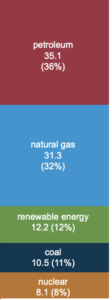
US Total Energy by Source, 2021
About 80% of total U.S. energy use comes from fossil fuels in 2022. About 45% of that energy use goes to produce electricity. In order to electrify everything, we’ll need to electrify the ~55% of energy use that currently comes directly from oil and gas. There’s a huge investment in the existing energy landscape – the petroleum refineries, gas stations, fossil methane (“natural”) gas fields and pipelines, coal mines, and electric grids that power our societies. Solving the climate crisis will require major changes in this supply infrastructure and the built environment that it feeds. This will require phasing out older, inefficient fossil fuel plants, and replacing them with a mixture of solar, wind, geothermal, and other clean energy and storage technologies. This would not only lead to greenhouse gas reductions, but also to dramatic air quality and public health improvements. Carbon capture and storage is an emerging technology that – if it can be made cost effective quickly enough – could help with this energy transition. Our main objective should be to wean the world off of fossil fuels as quickly and as inexpensively as possible.
Energy efficiency is the fastest and cheapest way to reduce greenhouse gas emissions and ensure that we can produce enough energy through renewables and storage to meet our energy needs. The efficiency resource is vast, and most efficiency investments in homes, offices, and factories are profitable, saving money and carbon.
Energy efficiency policies include:
- Stronger building codes to eliminate wasteful energy use, while improving comfort.
- Appliance efficiency standards to enhance the energy productivity of everything from lighting to refrigerators to office equipment.
- Incentives to accelerate the adoption of more efficient technologies, such as tax breaks for electric cars and lower mortgage rates for energy efficient homes.
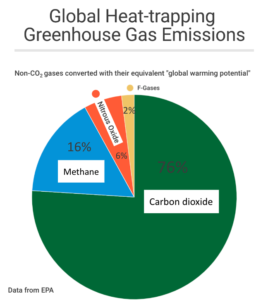
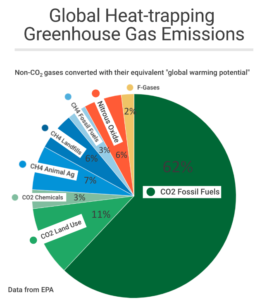
Mouse over the image to see more detail.
The pie chart shows how much of each heat-trapping gas is contributing to global warming. Carbon dioxide is the largest contributor mostly coming from the burning of fossil fuels. Carbon dioxide emissions also come from land use which is mostly from deforestation. CO2 chemicals is mostly cement production. For methane: animal agriculture is mostly cow burps, methane escaping from landfills as food and other waste decomposes, and methane from gas flaring and leakage from coal, oil, and gas mining and transport. Nitrous oxide is mostly from fertilizer and manure. F-gases are from refrigerants.
The transport sector – trucks, cars, buses, airplanes, cargo ships, railroads – is overwhelmingly dependent on petroleum. Today, transport of goods and people is responsible for about 14% of U.S. emissions. Increases in fuel efficiency standards can advance economic prosperity, energy security, and climate protection. Rapid deployment of electric vehicles, along with large investments in mass transit and walkable, bikeable infrastructure, are needed to reduce transport sector emissions in the long run and create healthier, safer cities.
Residential and commercial buildings consume the bulk of the U.S. electricity and many still rely heavily on fossil methane gas for heating. Designing new buildings for optimal energy efficiency and retrofitting older ones with better insulation and electric appliances (including heat pumps for heating and cooling) will dramatically improve their energy performance. Many existing buildings can be made up to 90% more efficient, and new buildings are actually capable of producing more energy than they consume.
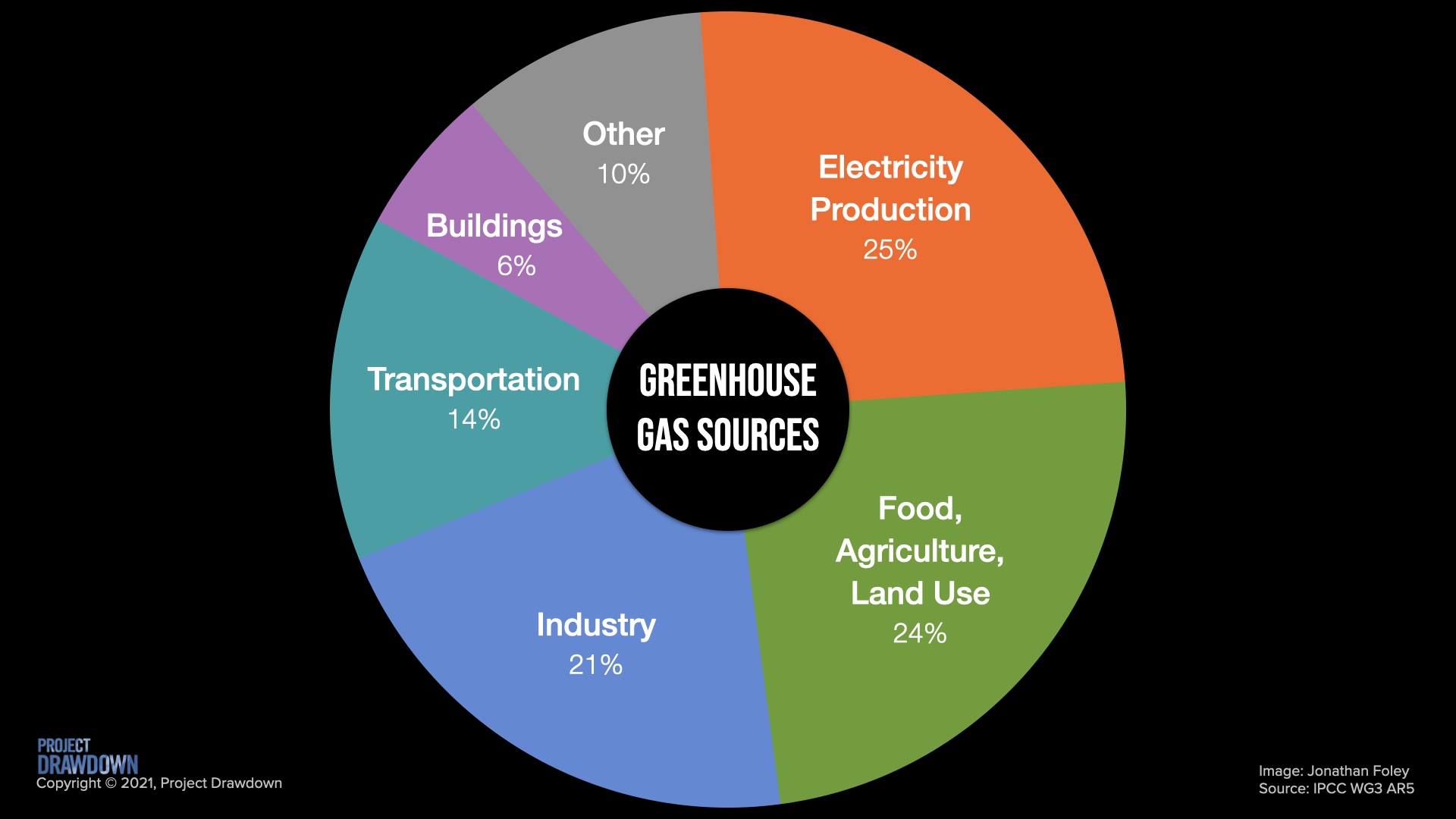
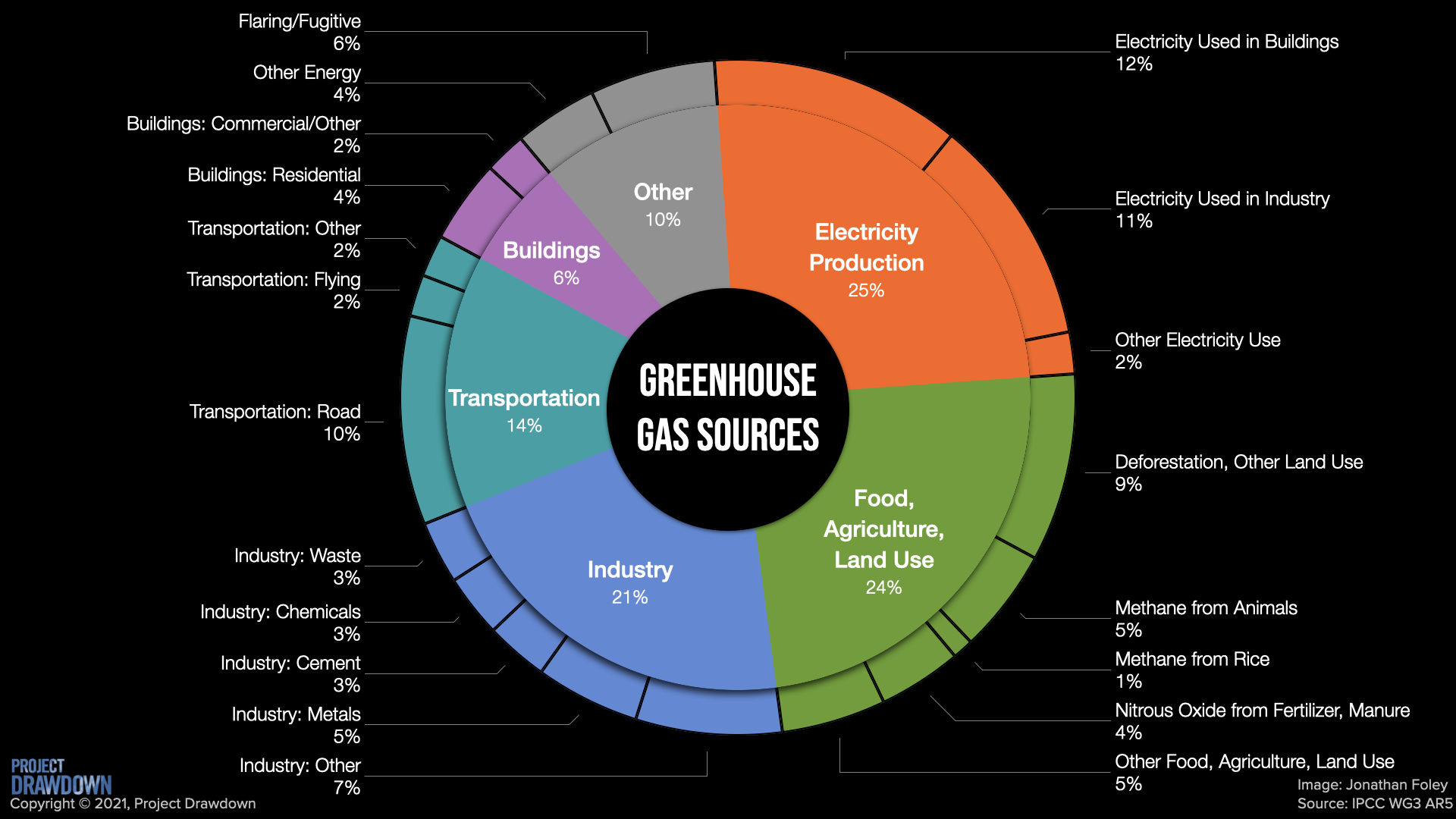
Mouse over the image to see more detail. Notice how much of this chart is energy related. Besides electricity, transportation is energy, buildings and industry use energy, and even the “other” category is mostly energy related.
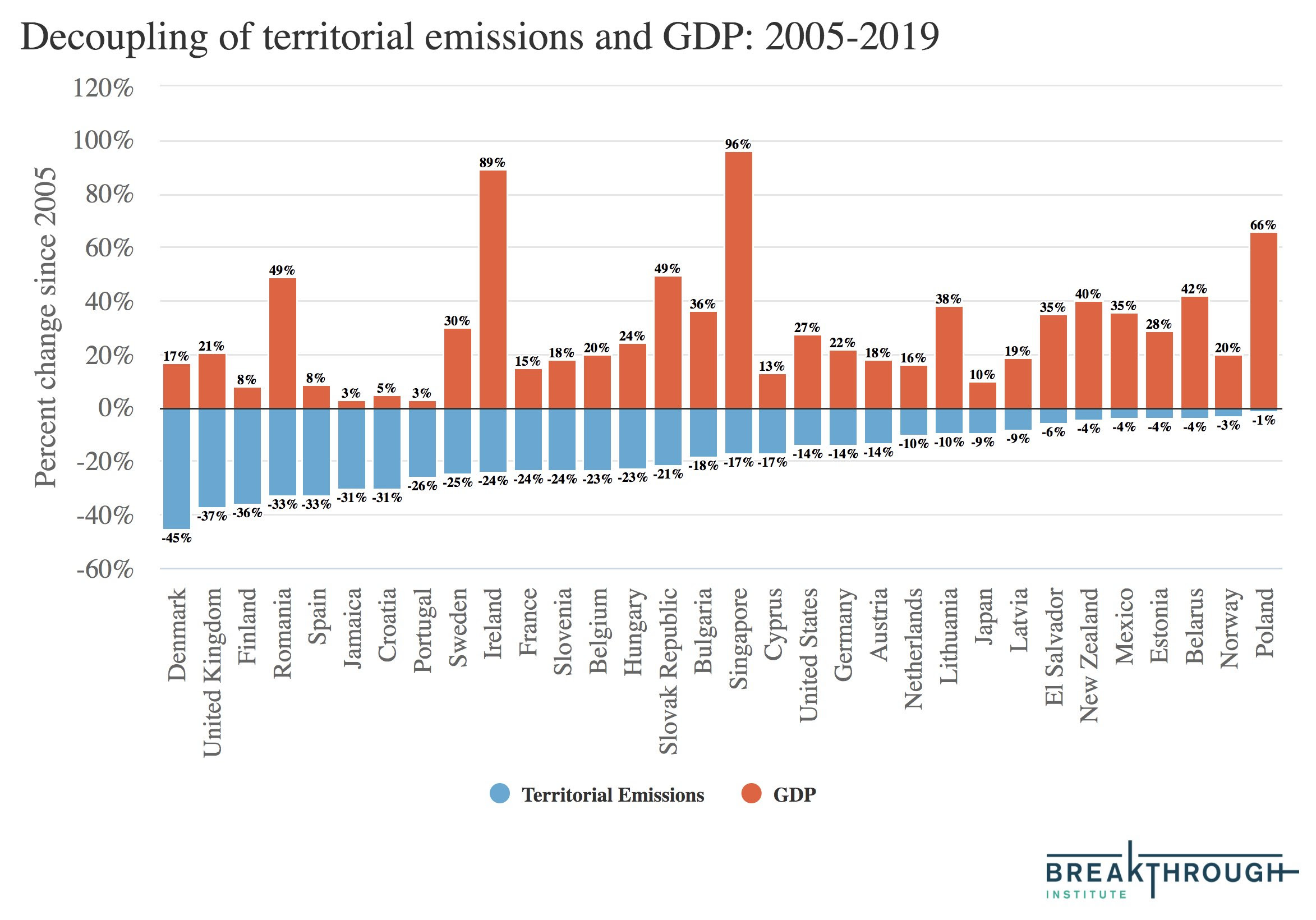
Many nations have decoupled emissions from economic growth through increased energy efficiency and a shift to non-carbon energy sources.


